
1

A Day
Observed

A story presented by

Scene 1:
‘Morning’

It was a bright cold day with glassy surfaces that looked hard.
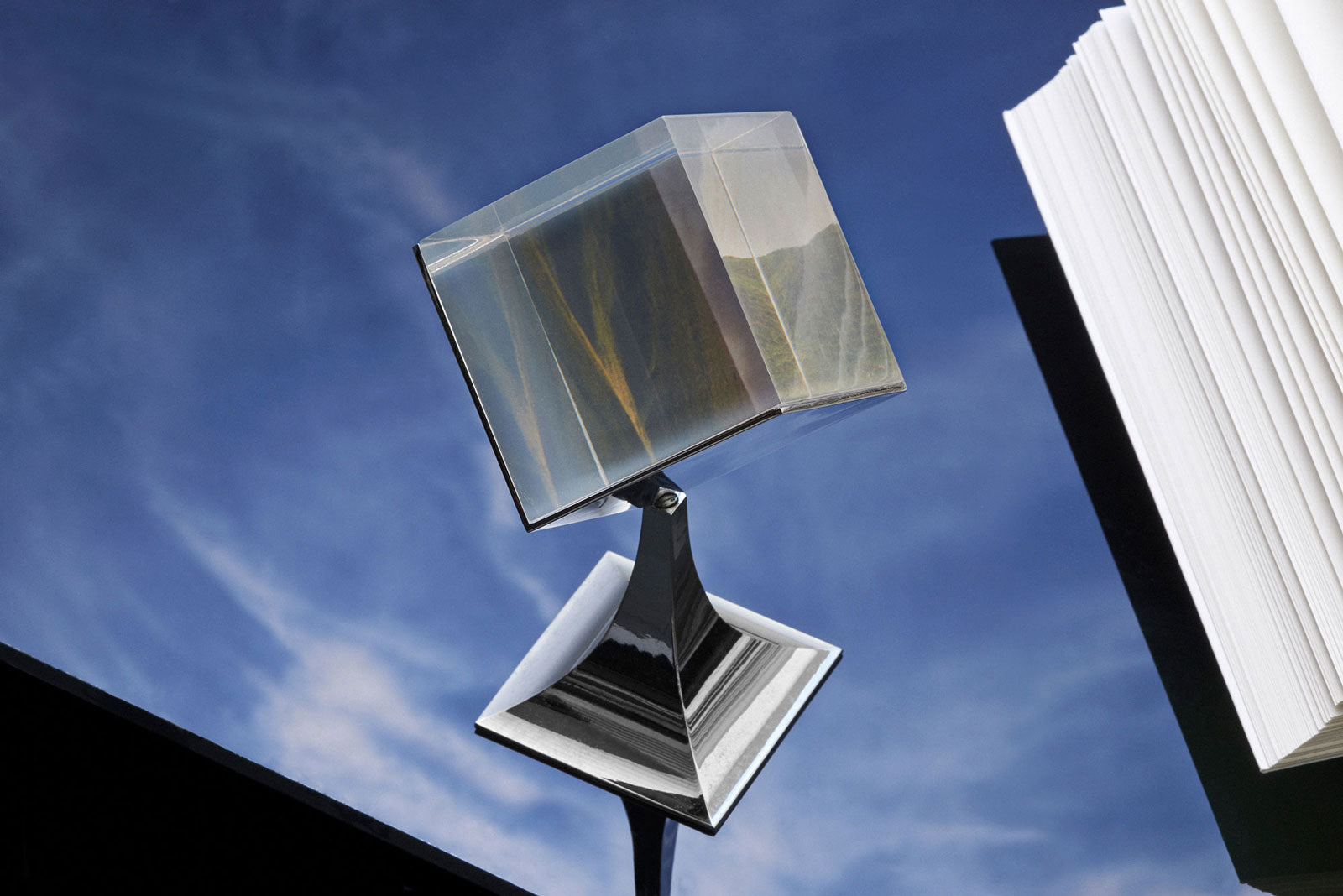
Into the square frame he stood as if in a dream.

What emerged was precisely what he expected to find: a reflection of memory images. Contemplating his face in the photo frame he waited.

1960s lucite and chrome 3 image photo frame

By the steady hands of his watch, he listened to time. Every day for the past sixteen days he saw her. Silver lingered in the crease of
an open book.

Rolex burlwood dial, Jubilee bracelet Miniature
oar English university trophy, sterling silver.

So absorbed in his thoughts
he hardly saw the platinum catch-all, the key, or the revelation locked inside those lapis lazuli cufflinks tossed unmistakably in cold blue.

Hans Hanson catch-all. Mid-century, Danish sterling silver. Stirrup money clip, by Hermès. Padlock keyring, sterling silver " Tie bar-slide " Round lapis lazuli cufflinks" Square cufflinks, two tone rose and yellow gold, diamond."

Only by whirling on his heel could he hope to comprehend
the panorama.

Shoe horn, circa 1930. American sterling silver
Scene 2:
‘Noon’

He remained.Trapped in that enormous room,
unmistakably familiar in feeling yet so peculiar.

Above the mantle was
displayed an Austrian hound
of impeccable integrity.

Hagenauer sculpture, 1930

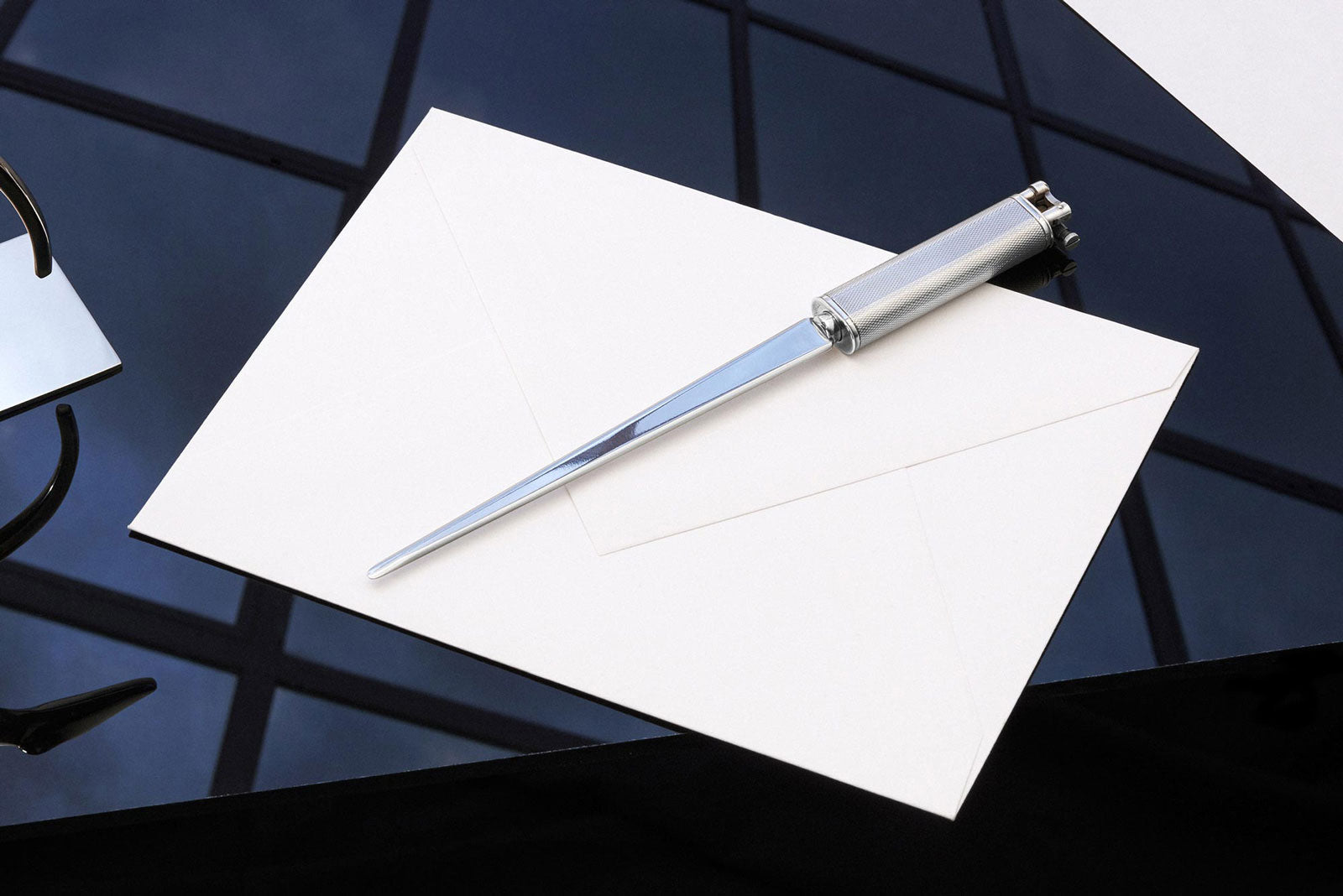
His gaze fell on the letter opener. By accident she had learnt more about his life from the contents of that letter than anywhere.

Dunhill letter opener with lighter top, circa 1950

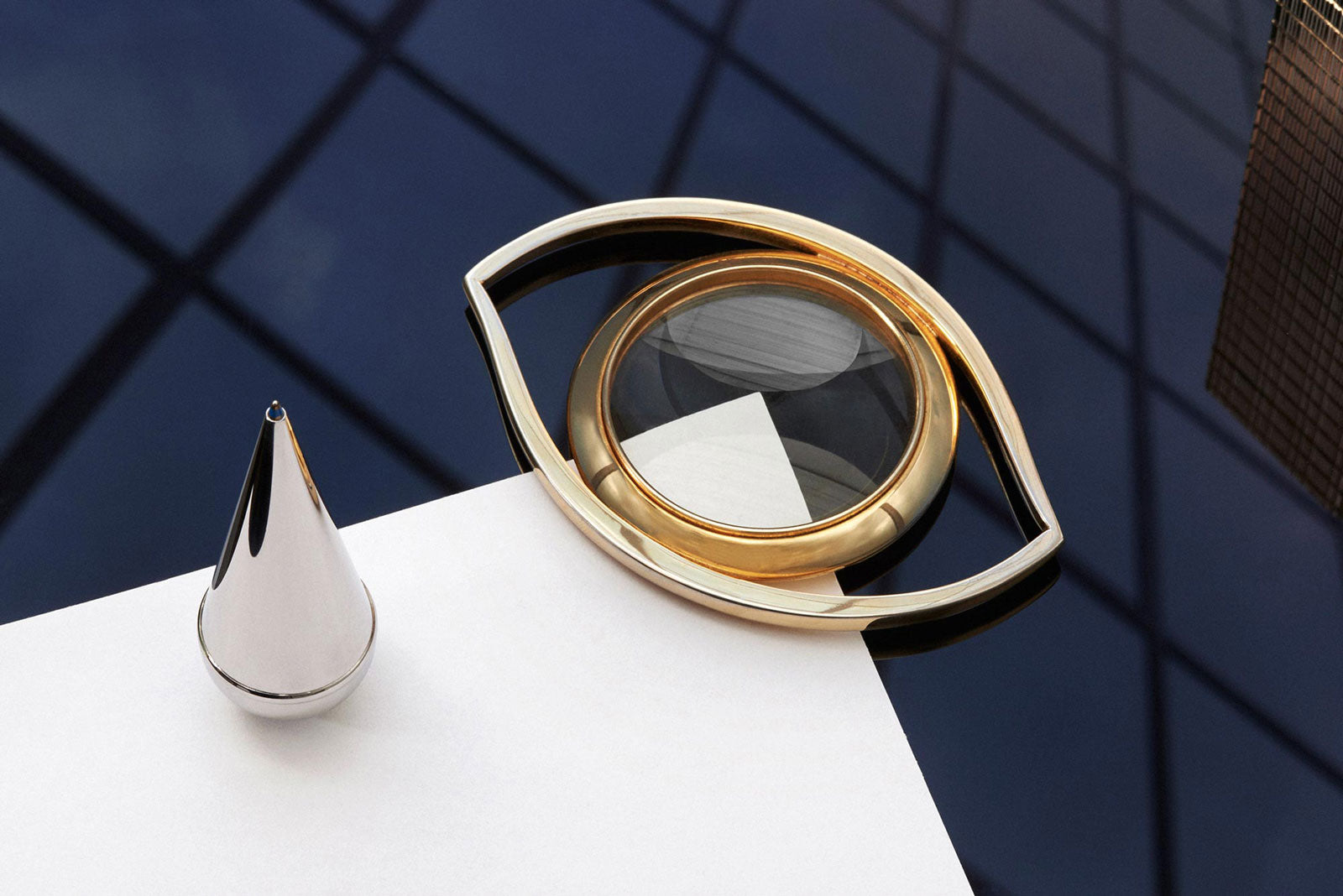
Cleopatra’s eye reflected
the sun. Through the hypnotism
of precious metals there
emerged a dark slender shadow.

Cleopatra’s eye magnifying glass. Mid-century, gold plated
Hermès weighted pen. Silver plated.

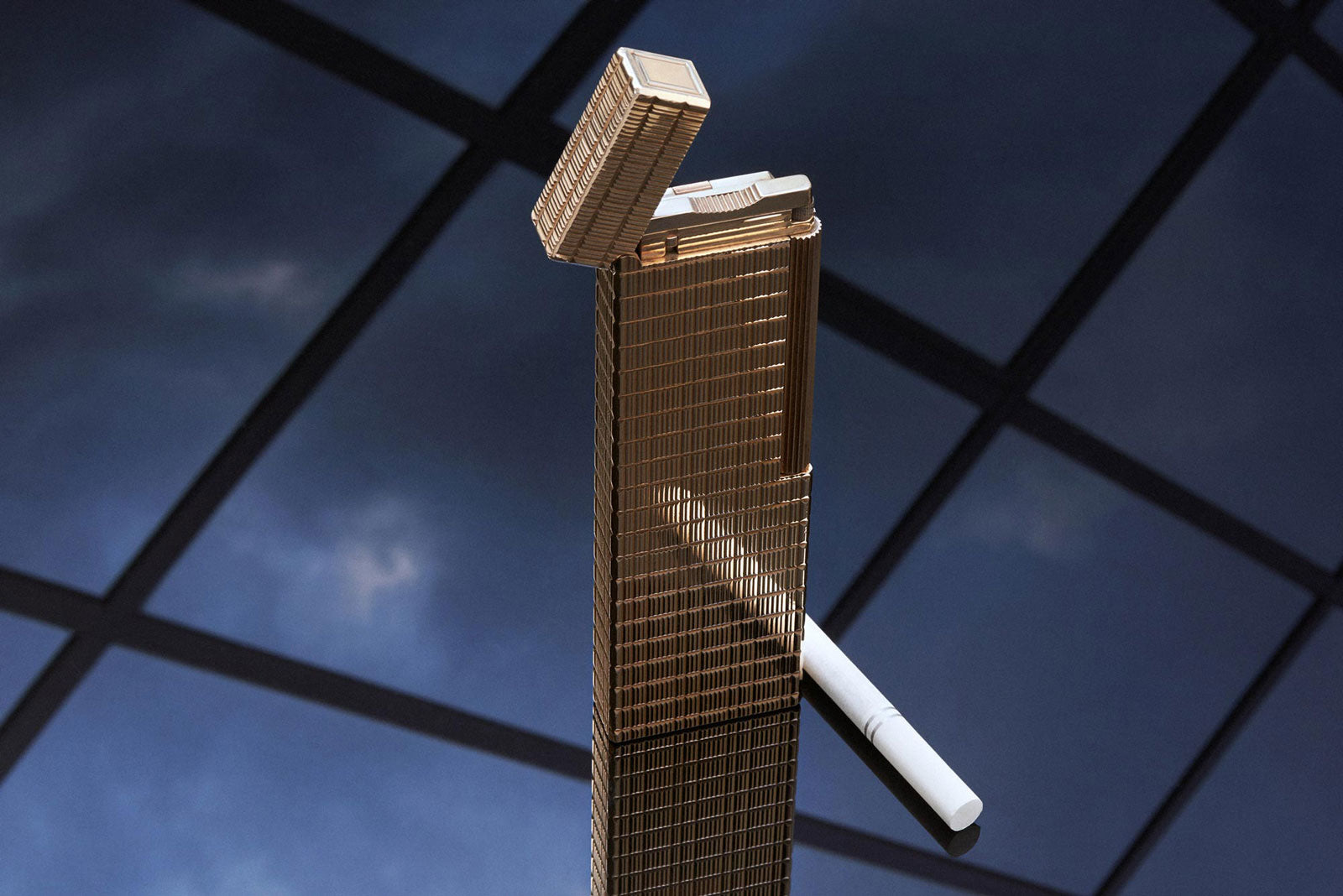
A lighter presented itself, smooth to the touch
it gave the impression of
intelligent company.

Table lighter St Dupont, circa 1960. Gold plate
Scene 3:
‘Evening’

All this time light was receding from the room.

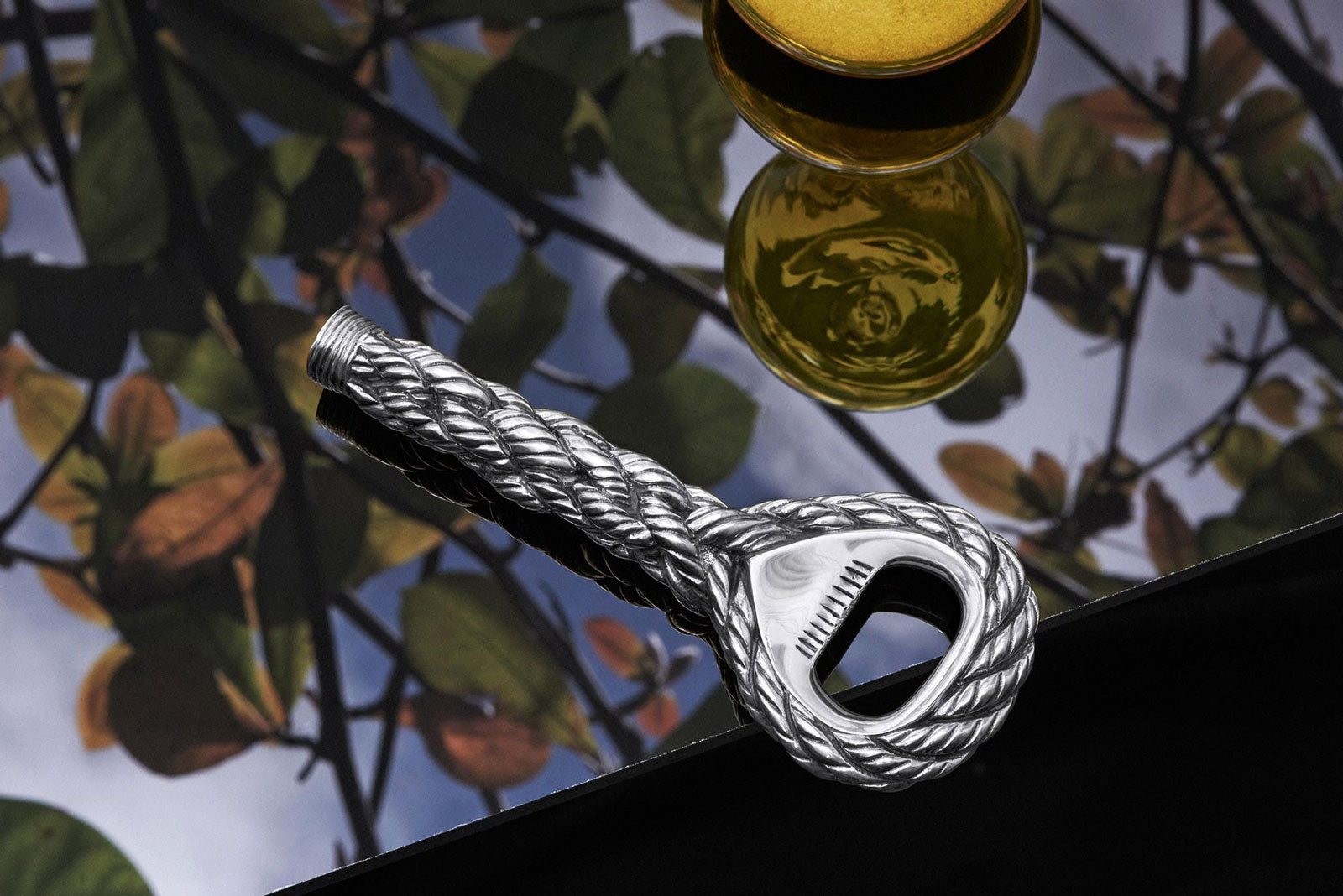
“I should explain why I spend so much time here”, said the silhouette. Leaves moved like shadows across her eyes.

Hermès rope bottle opener. Plated silver.

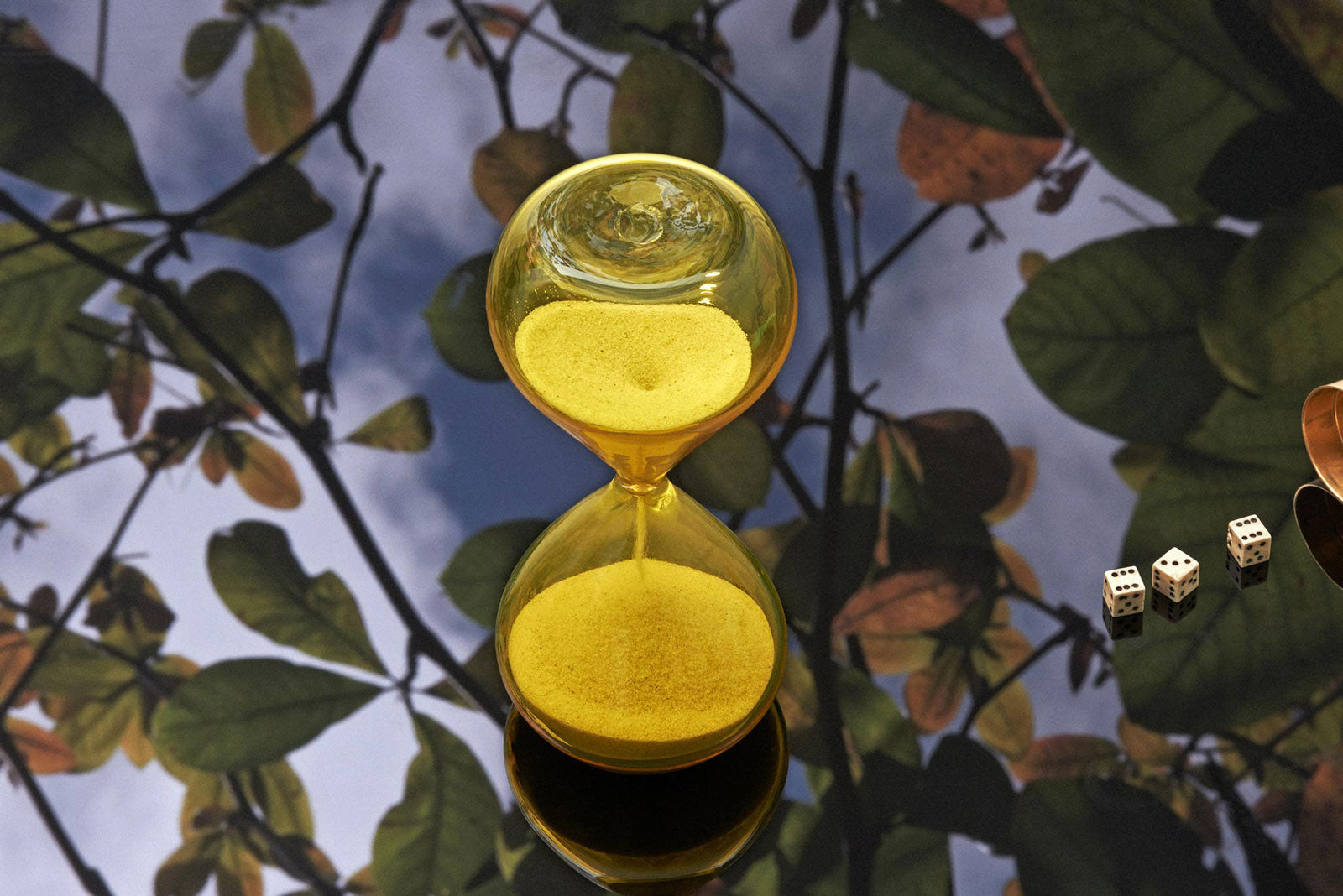
It’s not too late to turn back. Time moved with faint sounds.

Venini hourglass. Hand-blown lurid Murano glass.

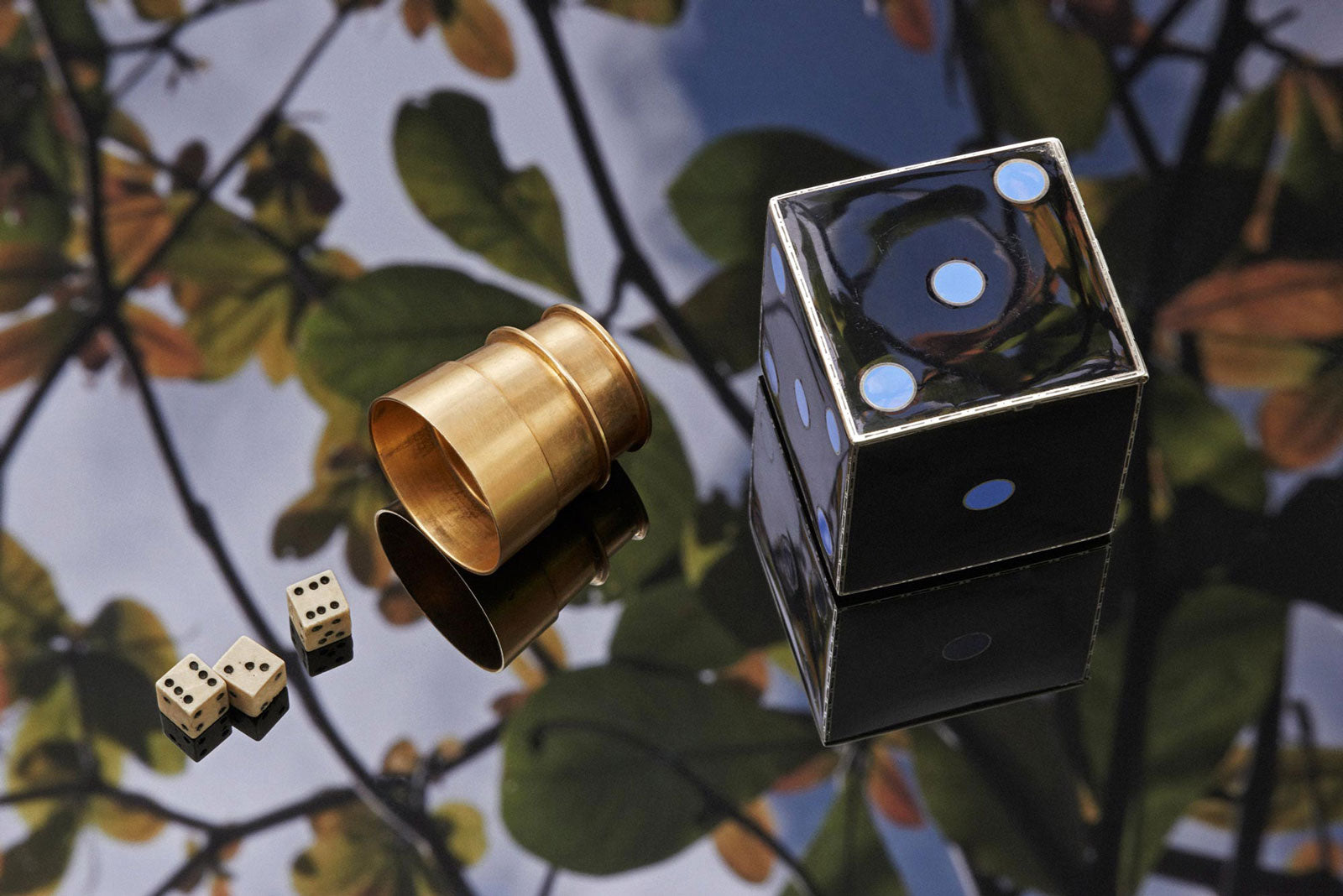
He unscrewed the telescopic cup, rolled and remained still. Black eyes on the dice prophesied a new cycle.

Telescopic cup, J. E. Cauldwell. Gold plated. Dice,
Cartier for America. Vitreous enamel glass, silver

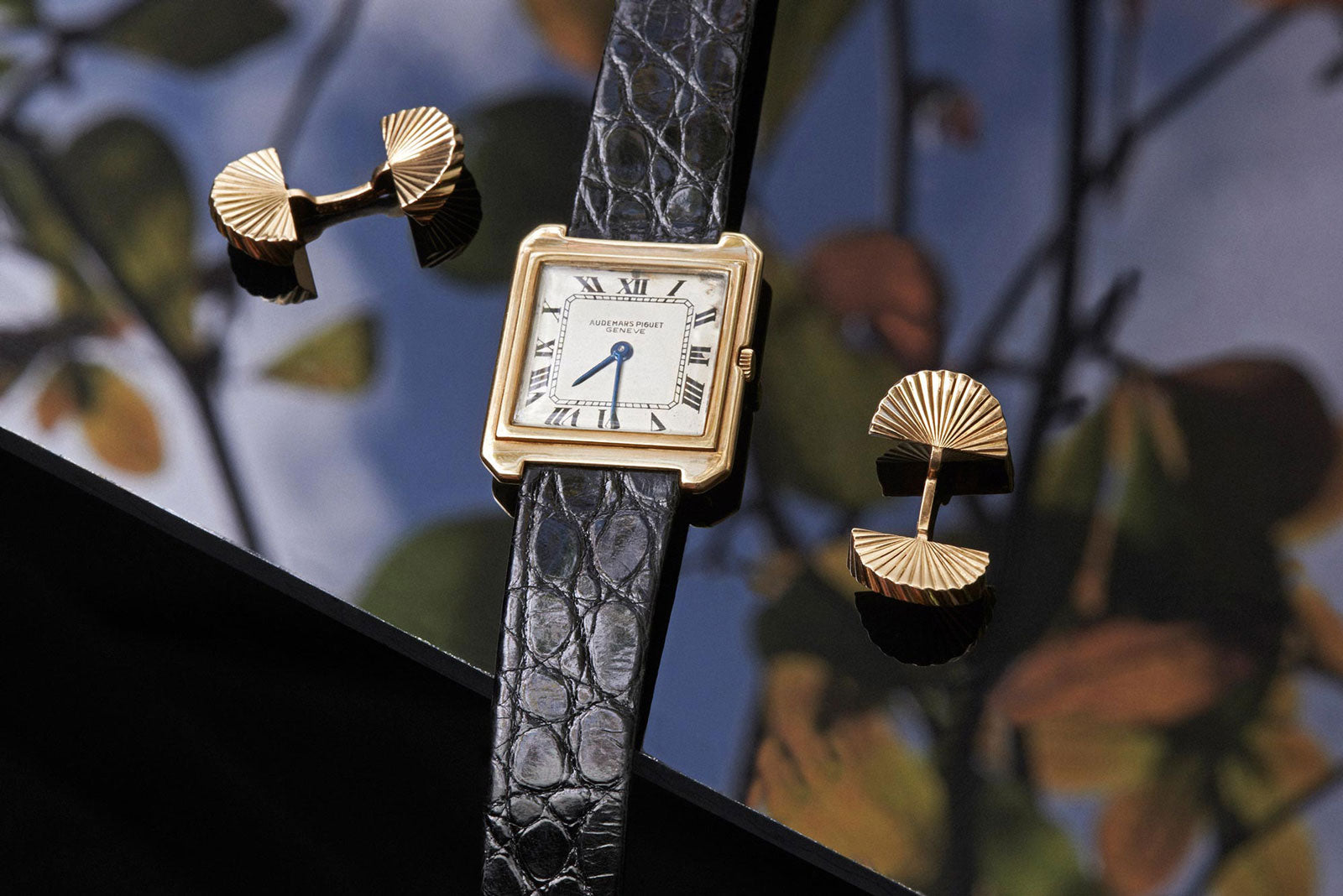
Staring down at the varnished surface her mouth worried him while her eyes examined the gold cufflink.

Audemar Piguet evening watch. gold plated, Roman dial, alligator strap
Scene 4:
‘Night’

Everything went crashing black.

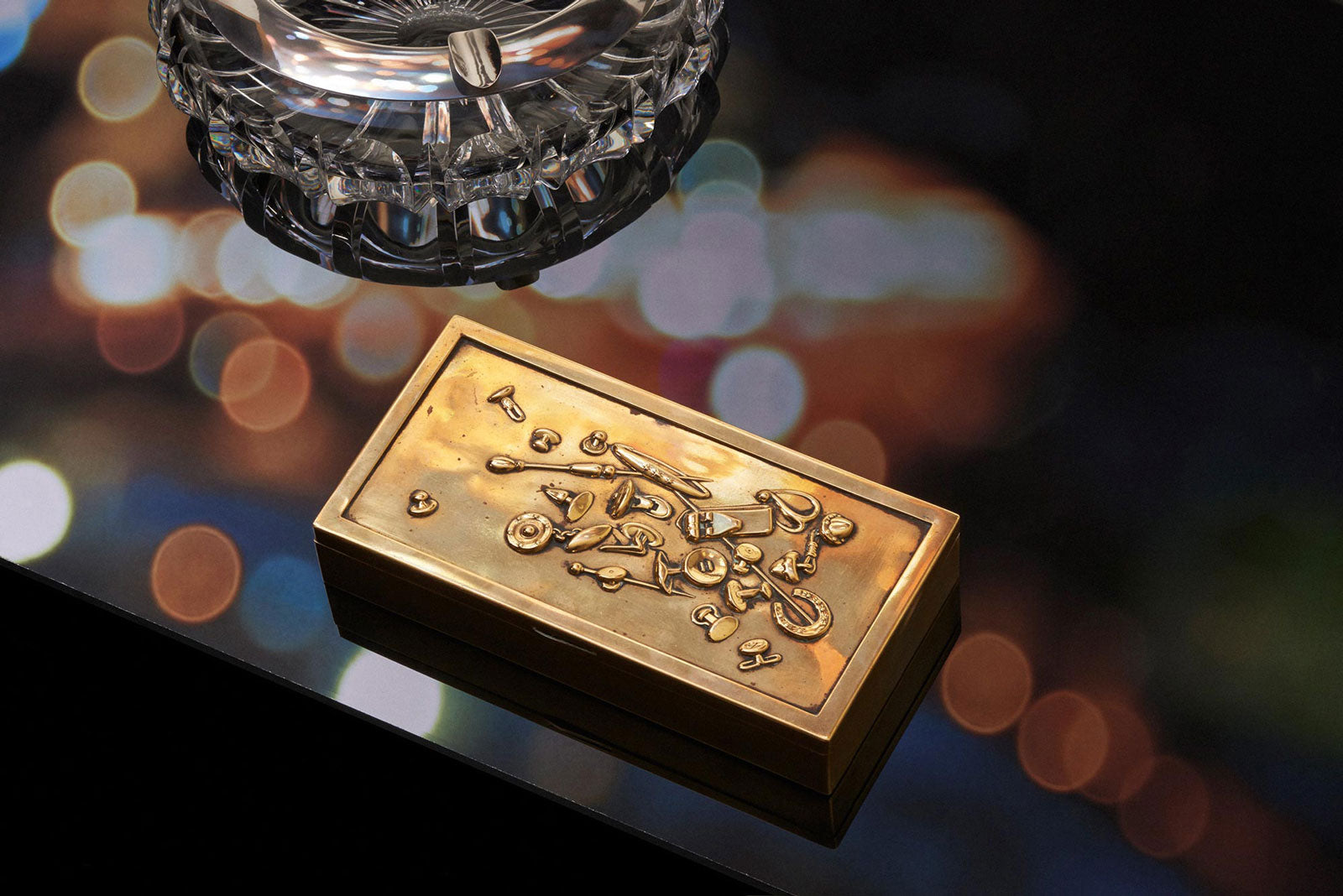
Pale graceful hands placed
the gold stud box delicately
on the table.

Men’s Edwardian jewellery box, 1910. Gold plated.
Mid-century British cigar ashtray. Sterling silver and crystal.

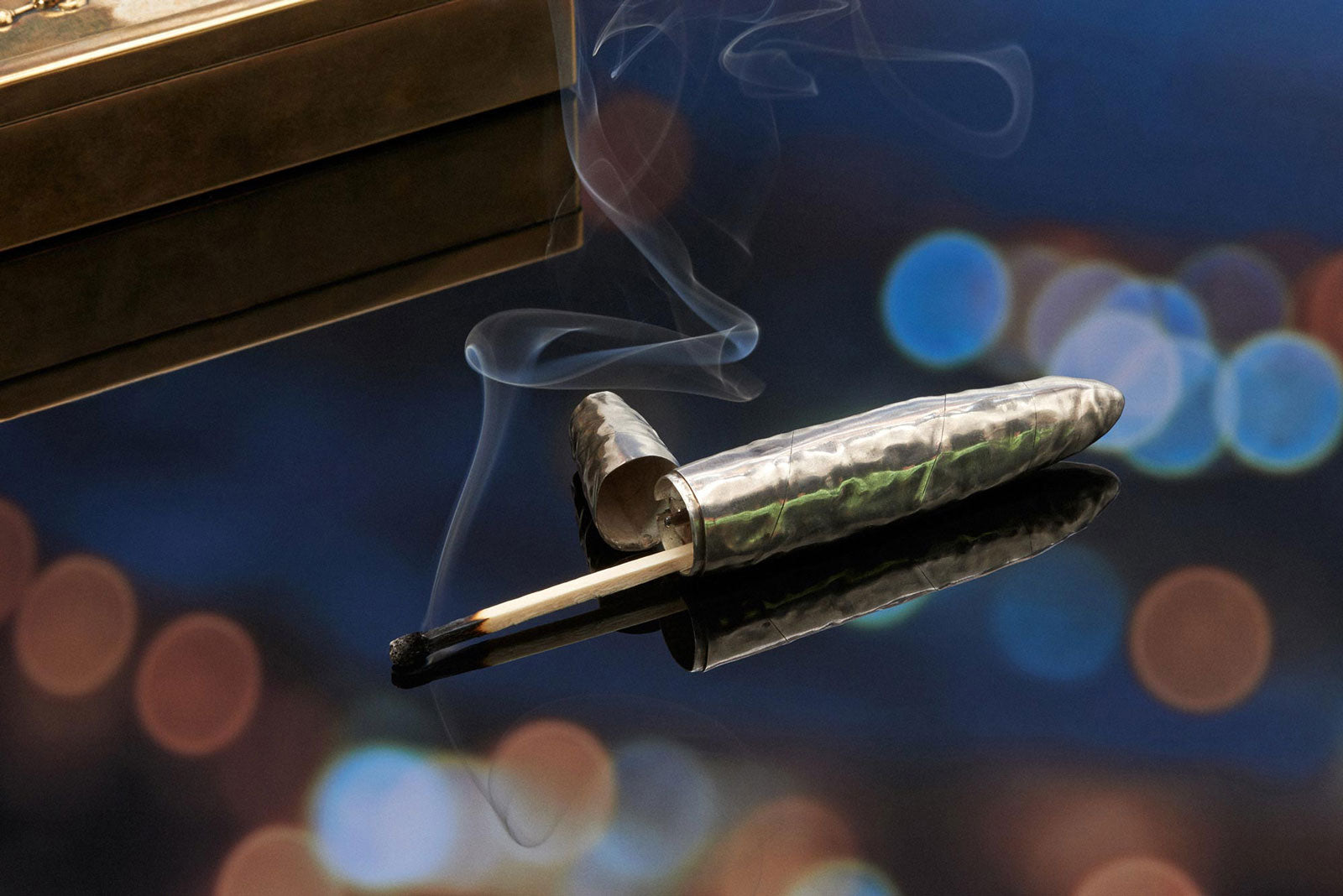
He lit a match to make sure the watch had really stopped. Smoke lingered from its vesta case.

Realist wrapped tobacco leaf march vesta. Silver.

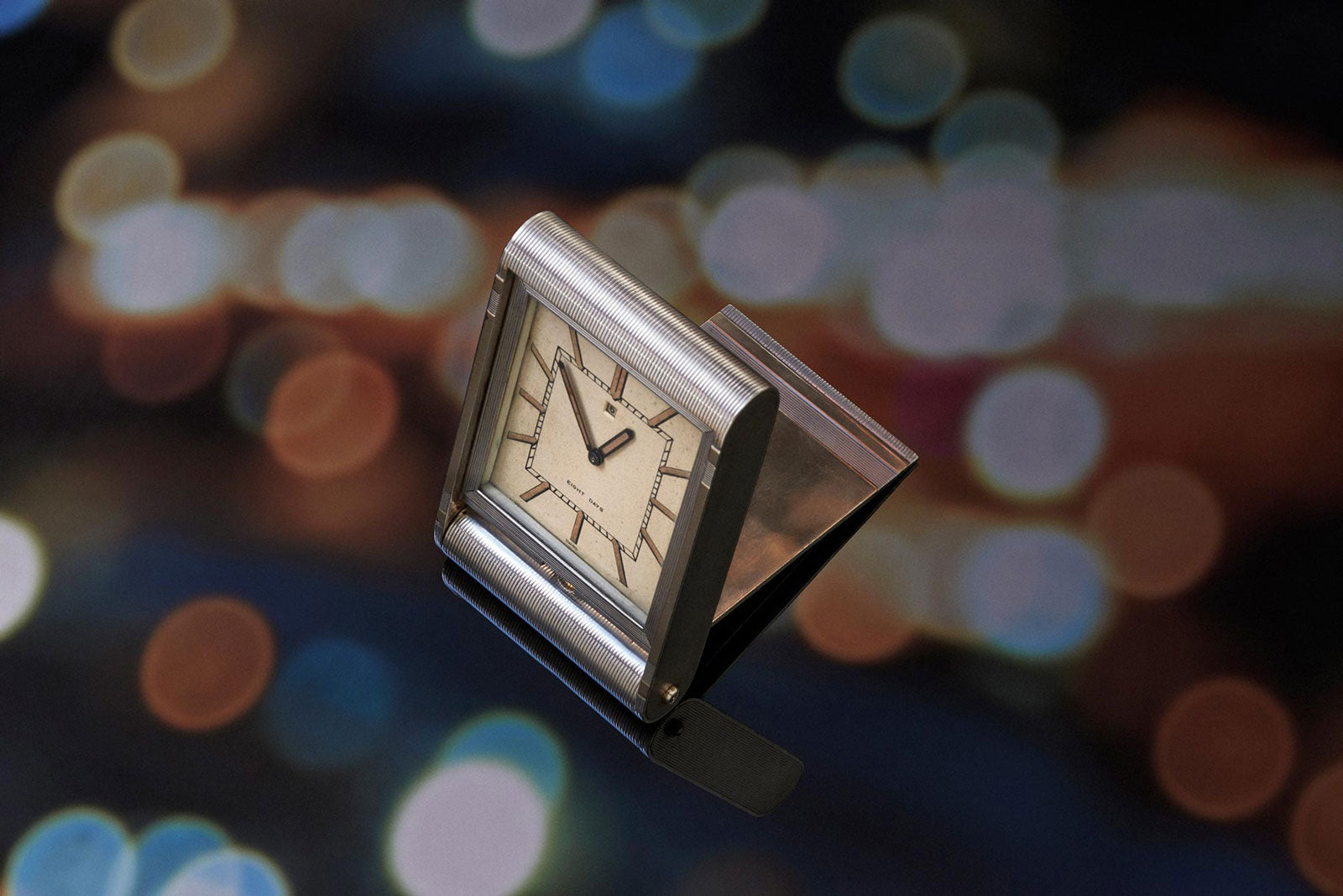
As the travel clock neared
one the figure vanished into dappled shadows.

Art Deco Jaeger LeCoultre travel clock.
Gold and silver plated. Retailed by Aspray.

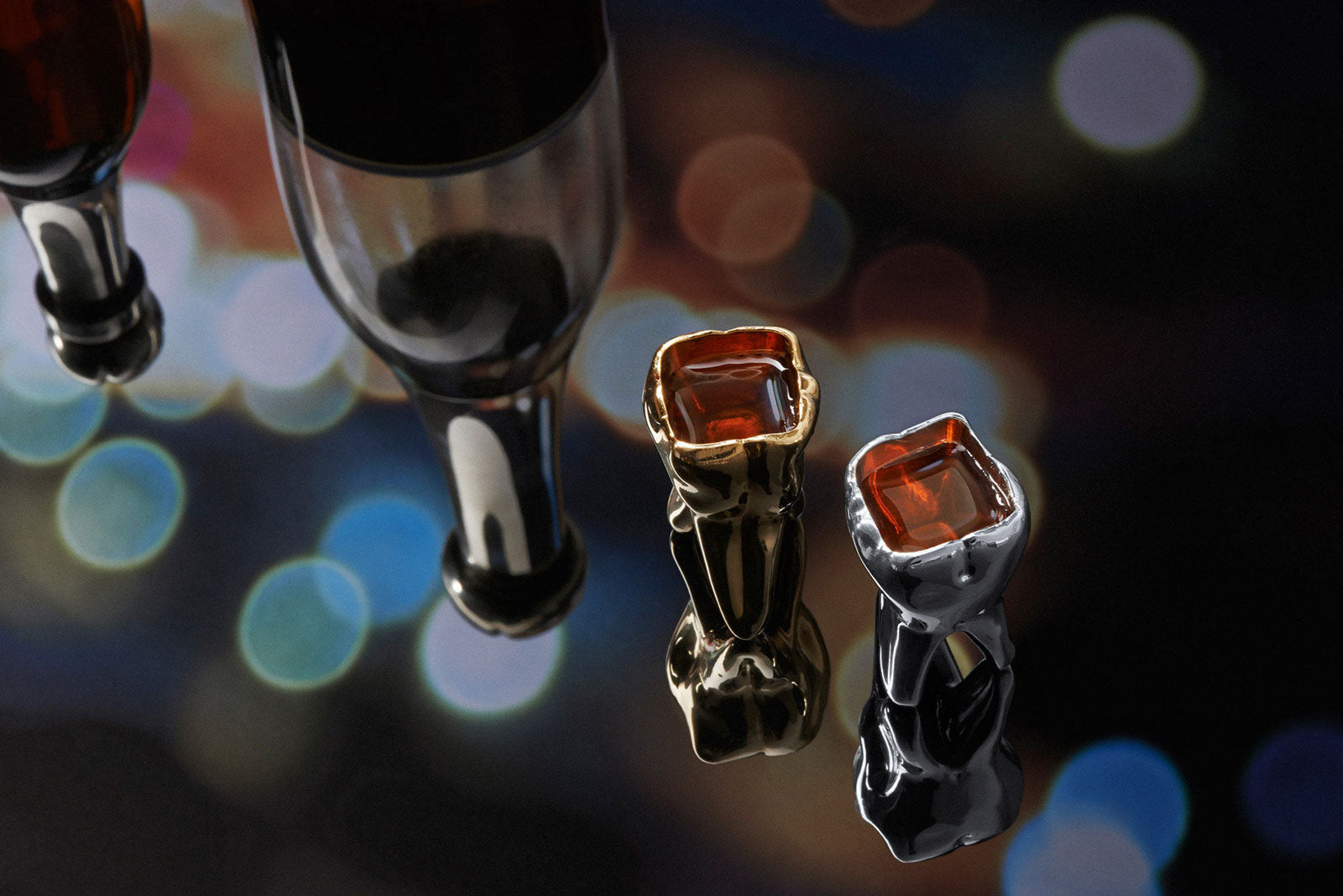
On the newly varnished table two bronze shot cups sat alive like in a dream.

Tooth shot cup by Foundwell. Bronze and silver plated.
Set of 4, 3 silver 1 gold. Heath & Midleton champagne decanters circa 1900.
Sterling silver and glass.
The End

‘A DAY OBSERVED’
A story by FOUNDWELL
Photography Matthieu Lavanchy, creative direction OK-RM,
notes by Kate O’Brien and objects selected by Alan Bedwell
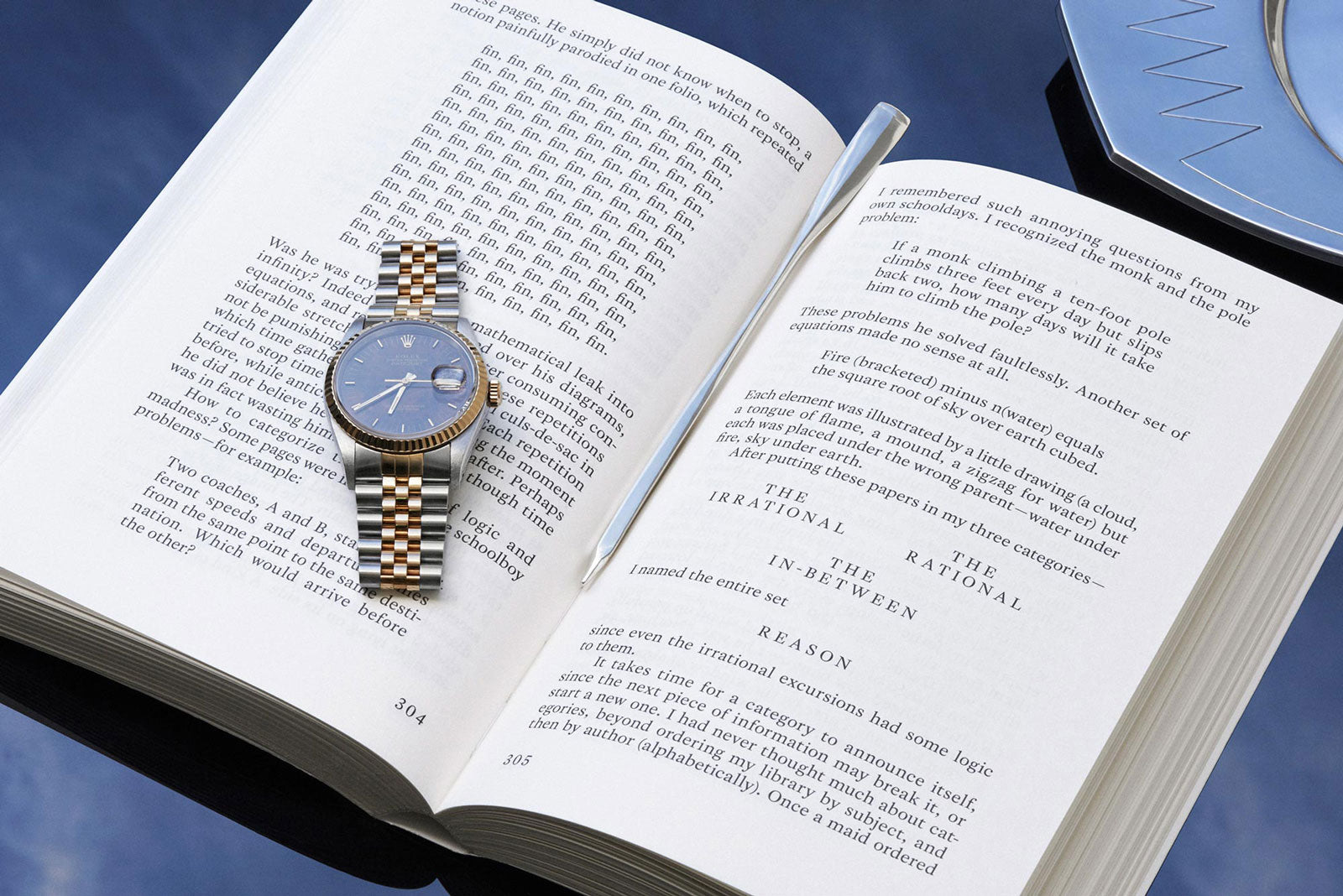

‘A DAY OBSERVED’
A story by FOUNDWELL
Photography Matthieu Lavanchy,
creative direction OK-RM
notes by Kate O’Brien
and objects selected by Alan Bedwell
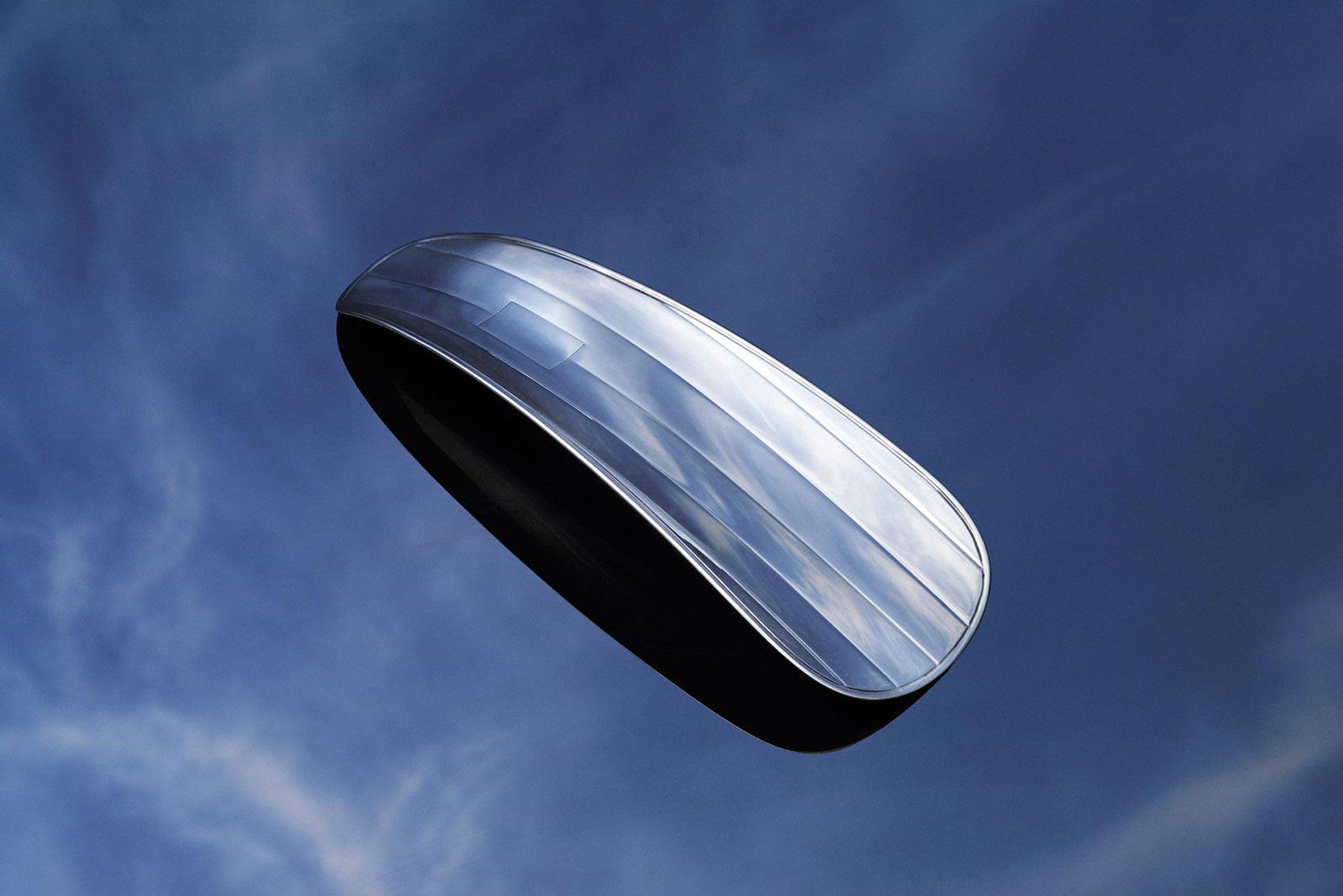
Early and Rare Sterling Silver Gorham Martini Mixing Bucket

Golf Cocktail Shaker
and Matching Golf Bag Cup

Sterling Silver Woven Bottle Coaster

Foundwell

A SELECTION OF ITEMS BY THE PRODUCER OF
CRAFTED GOODS & PURVEYOR OF ANTIQUE WATCHES,
JEWELLERY & OTHER SUCH OBJECTS

Shopping Bag

Your cart is empty.


A solid eighteen carat yellow gold Cartier Tank Normale. A variation of perhaps one of the most iconic watches of all time (and certainly one that has been desired by and worn by some of the most celebrated figures of the 20th Century to this current day). In fact, it feels that this special gem of watch design is actually entering into a renaissance in its desirability and collectibility. When initially launched all the way back in 1917, even the most ardent Cartier employee would have been hard pressed to imagine the watch would still be in the line and as popular as ever over one hundred years on.

The Cartier Tank Normale is not simply the first Tank. It is one of the defining objects of twentieth century design. Conceived by Louis Cartier in 1917 and introduced commercially in 1919, the watch established a visual language that Cartier would spend the next century refining, but never abandoning. Every Tank that followed, from the Cintrée to the Louis Cartier, Américaine, Française, and Basculante, traces its origin back to the sharp geometry and disciplined restraint of the Normale.

Its design was radical for its moment. Inspired by the aerial view of First World War military tanks, the case abandoned the soft curves and decorative flourishes common to early wristwatches in favor of straight architectural lines. The vertical brancards were not added ornamentation but part of the structure itself, extending seamlessly into the strap. Combined with Roman numerals, blued steel hands, a chemin-de-fer minute track, and a sapphire cabochon crown, the Tank Normale introduced many of the codes that would become inseparable from Cartier watchmaking.

What distinguishes the Normale from later Tank models is its severity. The proportions are compact, the lines precise, and the profile almost industrial in its purity. Later interpretations, particularly the Tank Louis Cartier introduced in 1922, softened the formula with elongated curves and a more fluid elegance. The Normale remained closer to the original idea: a modernist object rendered in precious metal.

Production during the early years was extremely limited, and surviving examples from the 1920s and 1930s remain among the most desirable vintage Cartier watches to appear at auction. Collectors place particular importance on examples from Cartier London, whose independent workshops produced some of the most distinctive and experimental variants of the model during the mid twentieth century. Watches featuring unusual dial signatures, elongated Roman numerals, colored indexes, and special commissions have achieved remarkable results at Sotheby’s, Phillips, and Bonhams, reflecting the growing recognition of the Tank Normale as one of Cartier’s purest and most historically significant designs.

Mechanically, the Tank Normale was never intended to compete through complication. Throughout its history Cartier utilized high quality manually wound movements sourced from respected Swiss makers, including Jaeger-LeCoultre and European specialist manufacturers. The importance of the watch has always rested elsewhere: in proportion, balance, and the rare ability to make something modern feel timeless.

In 2023, Cartier revisited the model through the Cartier Privé collection, reintroducing the Tank Normale in limited yellow gold and platinum editions. The revival underscored what collectors had long understood. The Tank Normale is not merely an early Cartier wristwatch. It is the foundation of the Tank line itself, and one of the clearest expressions of Cartier’s enduring belief that true luxury lies in refinement rather than excess..

The watch is powered by the classic Cartier movement from the time; the calibre 78-1, manually wound, based on the ETA 2512-1 platform: 17 jewels, 21,600 vibrations per hour, approximately 42 hours of power reserve, Côtes de Genève decoration, lever escapement, and flat hairspring. Far from being a high grade movement, it is simple, reliable and easy to service. This was the engine room for the Cartier mechanical watch program for a large part of mechanical collections.

The Cartier Tank Normale, reference 78092, was produced between 1973 and 1980, with an estimated total production of approximately 2,500 pieces distributed across four distinct dial configurations — Mark 1 through Mark 4 — differentiated by typography and signature. This is a Mark 2 watch, and is a prodcution numver of 698, making this a very early production piece of the mid 1970's. The case sides have been polished slightly over the years, but the back remains un

Overall, this is a wonderful and rare example of a take on the classic Cartier icon. The watch is fitted to an early Cartier lizard band with Cartier Tang buckle. A watch that will suit most occasions.

The watch does not come with the original box or paperwork from Cartier. The service history is unknown.


Price $16,895.00

×

Enquire
Item Dimensions
Case Width
0.8464567 inches (2.150000018cm)
Case Height Inc. Lugs
1.1811 inches (2.999994cm)